Gerald de Jong
For years it was just code, just virtual. Now the tensegrity has become real.
Building, extending, rebuilding
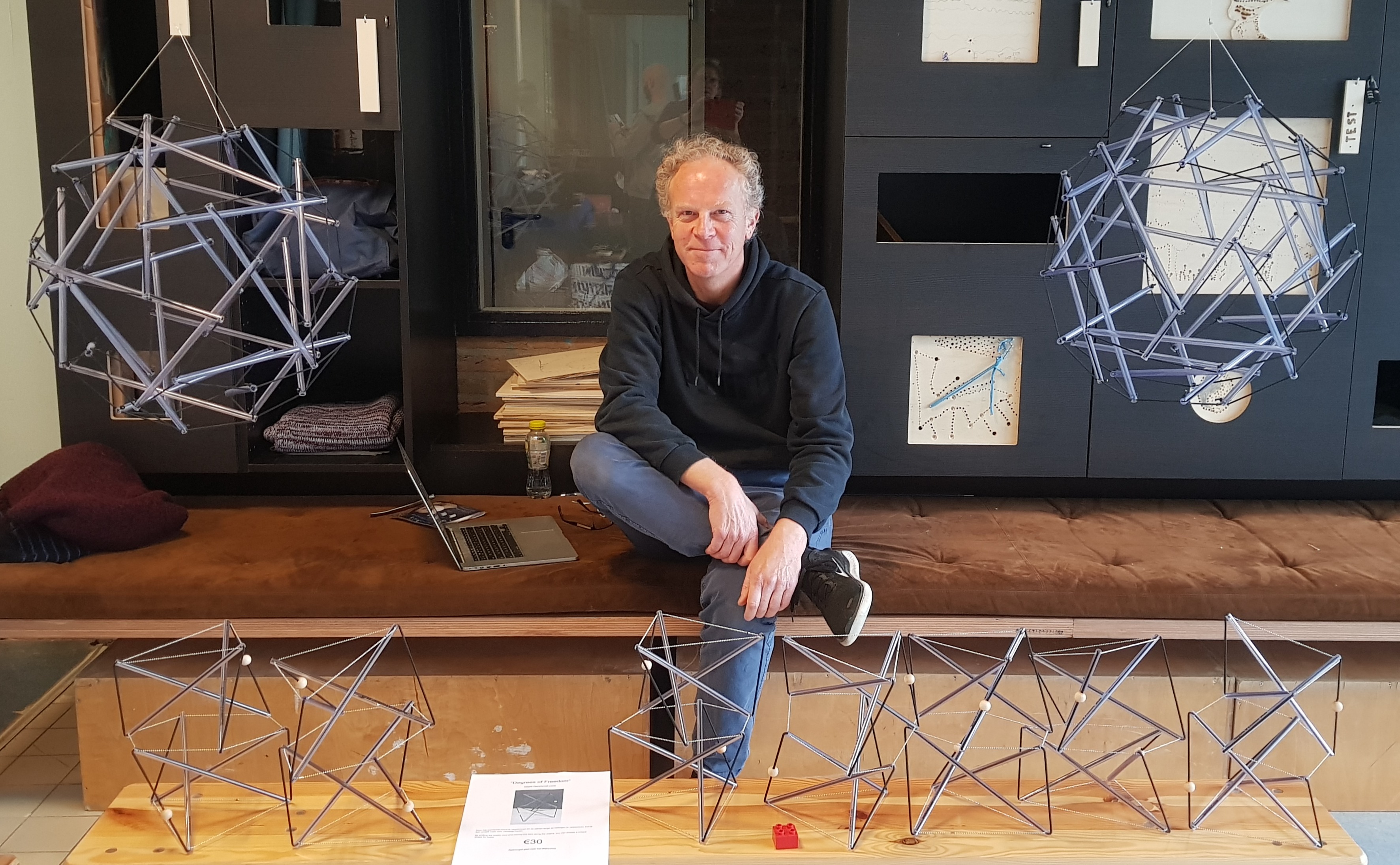
Building systems, testing them, extending and rebuilding. The building blocks of a career in programming, migrating from language to language, from one technology to the next. These are the same kind of building blocks that I still use. Now, instead of just zeros and ones, I now use steel and aluminum, bars and cables.
I was a software developer at heart before I was an artist. Long before there was sculpture, there was code — systems built to be extended, rebuilt, and understood through the act of making. I learned new programming languages every time again by rebuilding my tensegrity code, because it was the most fun way to learn, and I felt an intrinsic motivation. The instinct never left me. It just found new materials.
The shift
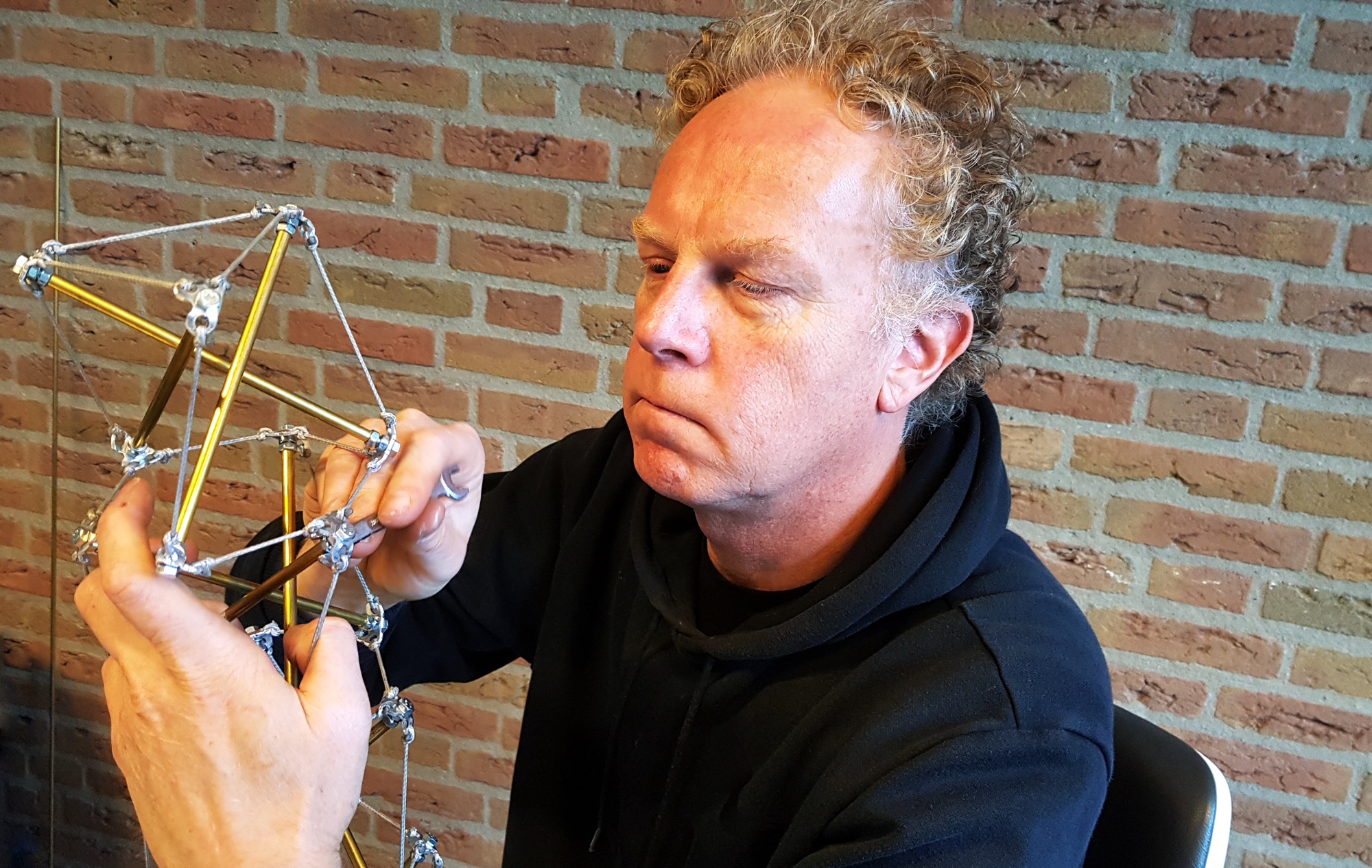
In the early 1990s, I encountered the work of Kenneth Snelson — the inventor of tensegrity, a structure that holds itself together through the pure interplay of tension and compression. The simplicity of the core idea was inspiring.
“How is that even possible?”
I stood in front of one of his sculptures and felt something shift. I got curious. I got ambitious to one day make something like this. Something massive.
Life intervened
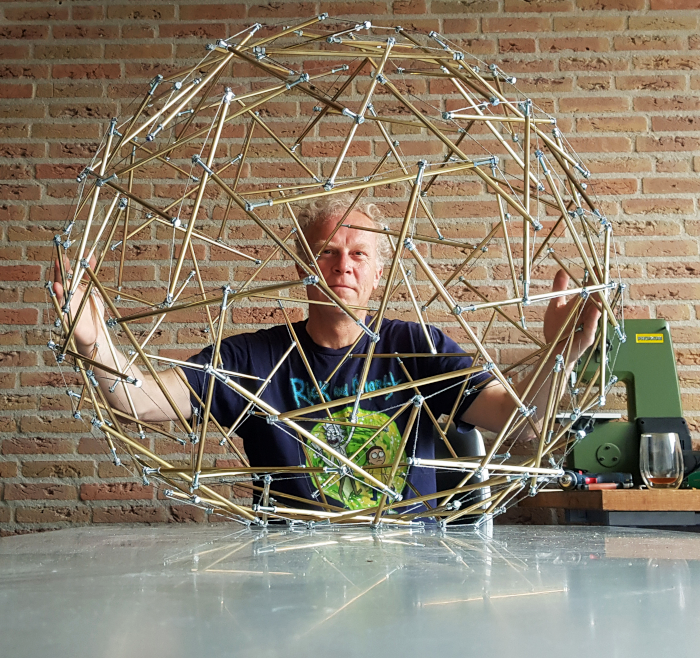
I became a father in ‘93, and family rightfully took the foreground. But tensegrity never left my mind. I kept building little tensegrity structures over the years as my family grew. I was always playing with my tensegrity code, learning how to orchestrate and generate ever more complex constellations of push/pull elements.
I even reached a point, inspired by the books of Richard Dawkins, to implement Darwinian evolution, with competing structures outfitted with virtual “muscles” and judged on their ability to walk/run/jump the furthest. What was static evolved to run like the wind over thousands of generations.
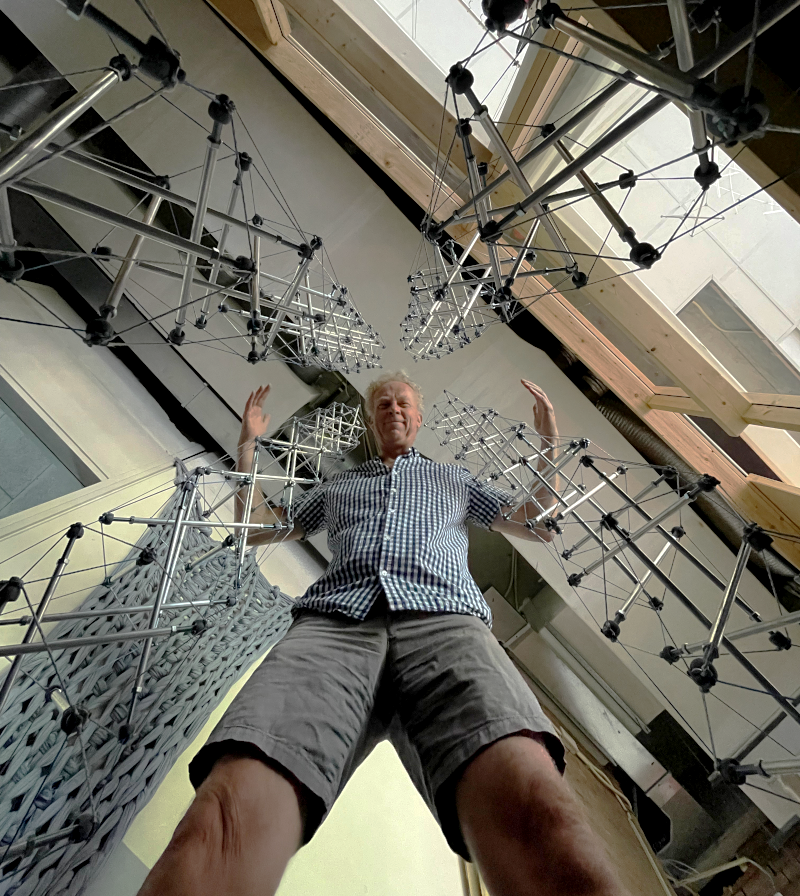
Now that my children are grown, I am raising physical sculptures so that they can hopefully grow and evolve as well. I have been working to develop the systems and techniques for scaling up and exploring the design space of large tensegrity structures. Soon I should be able to generate a new design with the software, predictably order parts, and start the assembly at this scale.
Fluxe
At some point I started to call my work Fluidiom — a combination of fluid and idiom, kind of like tensegrity combines tension and integrity. The idea that a creative language is always in motion, always evolving, and the physics of the structures I programmed seemed to flow. When social media appeared, I decided on the handle Fluxe. The meaning carried over: flux, flow, constant change.
My sculptures are never truly finished. Instead they continue to grow as they interact with the world around them — with light shows, with nature, with anyone curious enough to get close.
Something massive, yet fleeting
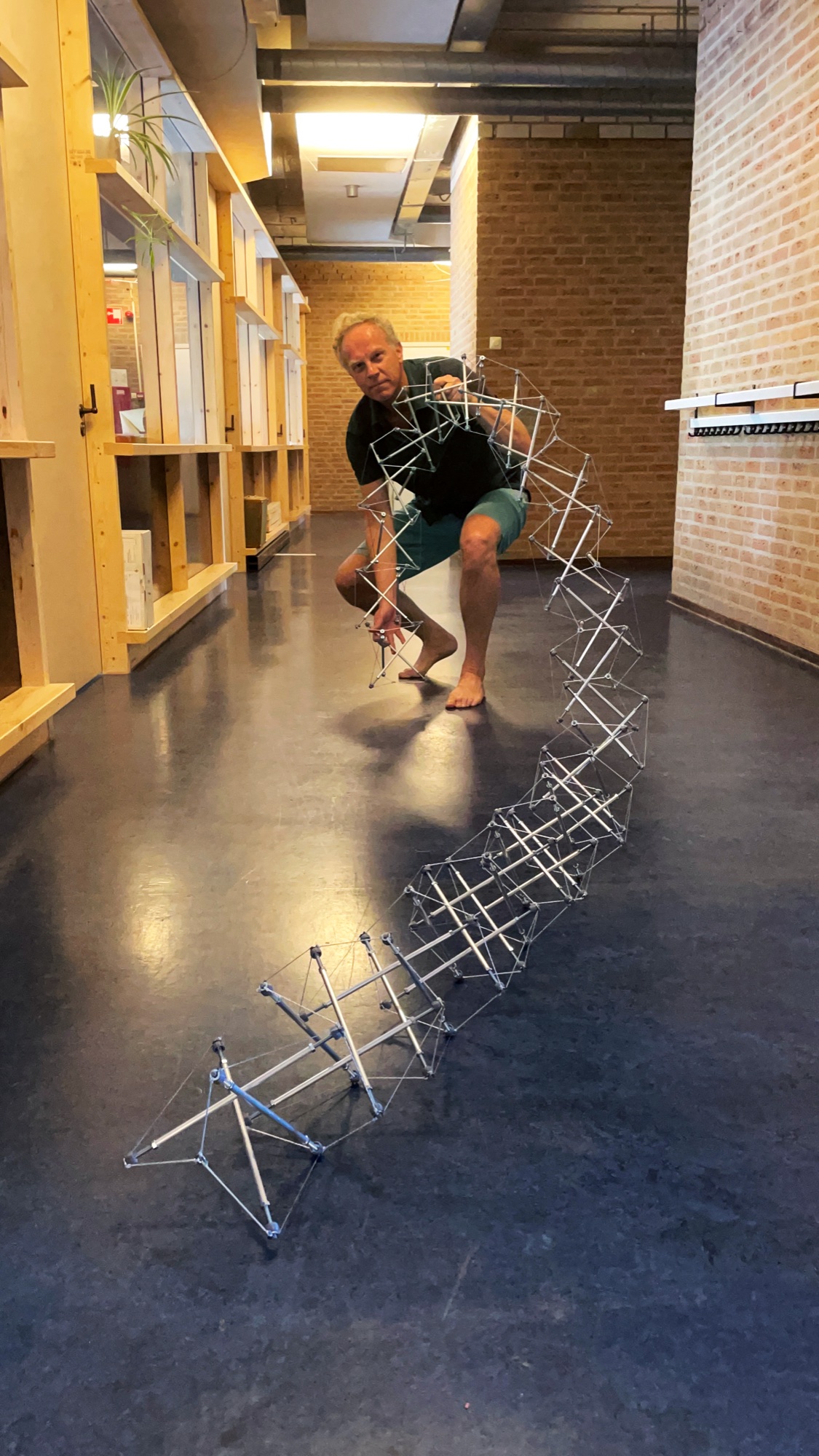
The builds keep getting bigger. That’s deliberate. They started small, since I had to learn by tinkering how to bring tension and compression together. But there’s something breathtaking about tension/compression structures at large scale. Somehow it conveys an uplifting feeling, a weightlessness, kind of futuristic impression.
Since the great Kenneth Snelson has passed, I have felt almost responsible to carry the torch for tensegrity into the future. I have a new approach that he didn’t have, because of my background. It’s much more of a system than a collection of permanent sculptures. It’s ephemeral, growing, always renewing.
These sculptures are designed to be assembled, taken apart, and rebuilt somewhere new. They’re not finished when they are taken down. They’re finished when they find their rightful home where they can inspire.
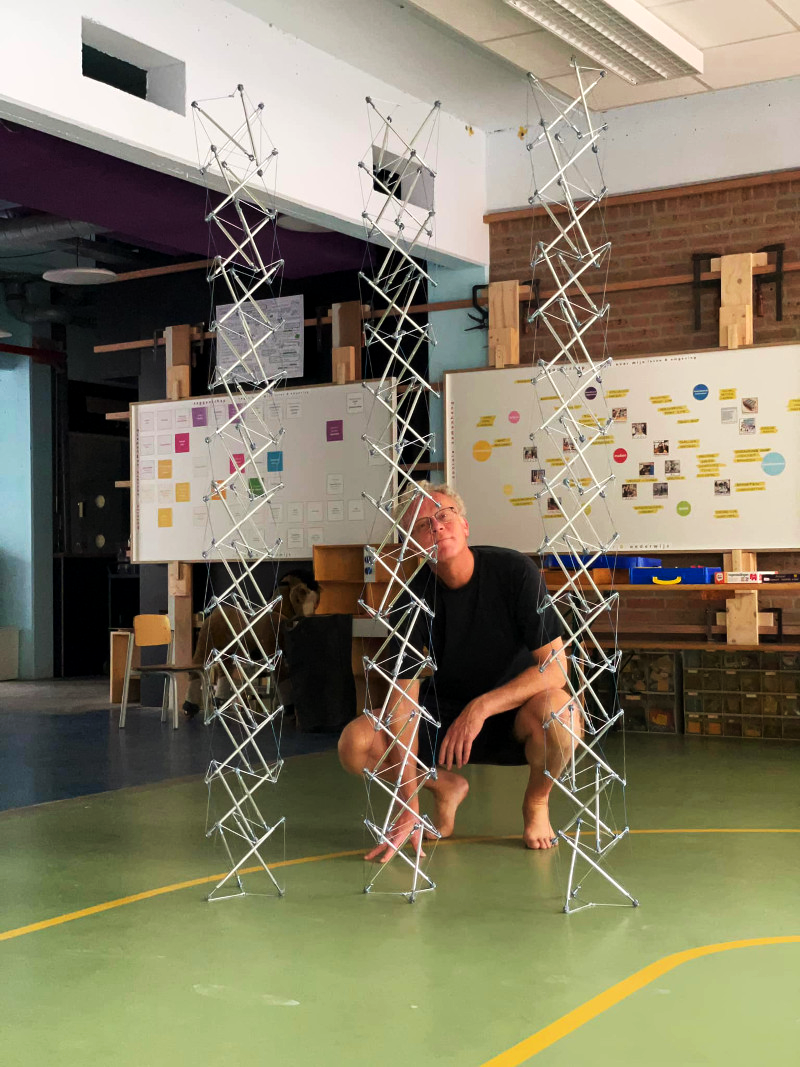
Invitation
“I don’t think of this as my artwork. I think of it as an invitation.”
Snelson inspired me. I want these structures to inspire someone else — to challenge the ideas we have about what we know and what is new.
That is what Fluxe is. That is what I am growing.
Want to know more about
the process or the code?
Whether it's about the physics behind it, the software that generates it, the construction techniques that make it real, or simply wanting to see it in person — get in touch.
Start the conversation →